

Understanding Civic Heraldry and Municipal Emblems
Civic heraldry serves as a visual representation of local government identity, encapsulating the history, culture, and values of a community within its emblems. This comprehensive guide will explore the significance of municipal emblems, their design elements, and their cultural relevance. Readers will learn how these symbols not only reflect local heritage but also play a crucial role in community identity and governance. Understanding civic heraldry is essential for appreciating the rich narratives behind these emblems and their impact on local pride. This article will cover the historical significance, design elements, cultural relevance, modern trends, and practical applications of civic heraldry.
Historical Significance
Civic heraldry has deep historical roots, originating in medieval Europe when coats of arms were used to identify individuals and families. These symbols evolved over time, transitioning from personal identifiers to representations of cities and municipalities. The cultural significance of these emblems is profound, as they encapsulate local legends, historical events, and the collective identity of communities. Understanding the historical context of civic heraldry allows us to appreciate the evolution of these symbols and their enduring relevance in contemporary society.
Design Elements
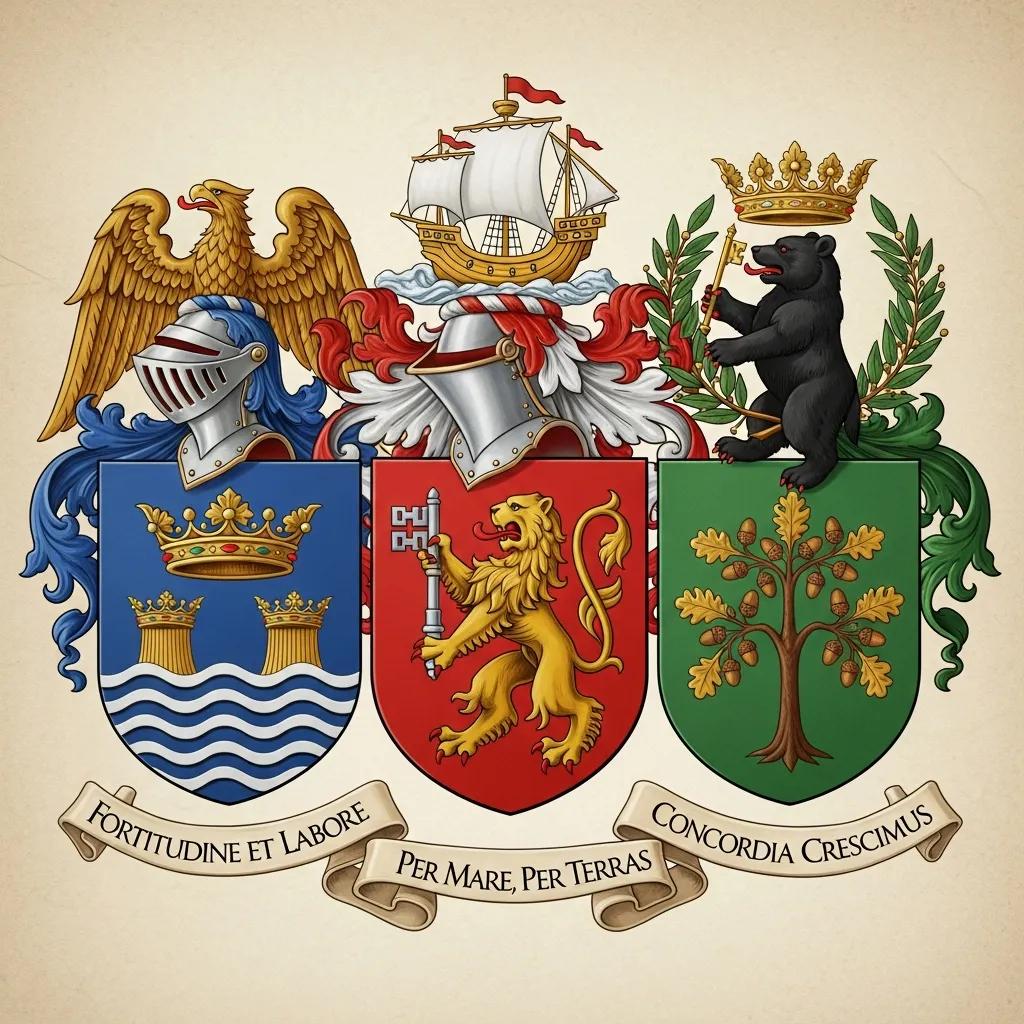
The design of municipal coats of arms involves several key components that convey specific meanings and values.
Key Heraldic Elements in Emblem Design
Municipal emblems typically include shields, crests, and mottos, each serving a distinct purpose. The shield often displays the primary symbols representing the community’s identity, while the crest may feature additional elements that enhance the emblem’s narrative. Mottos provide a succinct expression of the community’s values or aspirations, further enriching the emblem’s meaning.
Symbolism and Color Meanings in Municipal Heraldry
Colors and symbols in heraldry carry significant meanings, often rooted in historical and cultural contexts. For instance, blue may symbolize loyalty, while red can represent courage. Understanding these meanings is crucial for interpreting municipal emblems accurately. Below is a table summarizing common colors and their associated meanings in heraldry.
The symbolism embedded in these colors and elements contributes to the overall narrative of the emblem, making it a powerful tool for community representation.
Cultural Relevance

Civic heraldry is not just a collection of symbols; it reflects the cultural heritage and identity of a community. These emblems often draw from local legends, historical events, and significant figures, creating a rich tapestry of meaning that resonates with residents. The role of civic heraldry in fostering community pride cannot be overstated, as it serves as a reminder of shared history and values.
For instance, many municipal emblems incorporate symbols that pay homage to local industries, natural resources, or historical milestones. This connection to local culture enhances the emblem’s significance and fosters a sense of belonging among community members.
Indeed, the very landscape and natural elements of a region, known as geodiversity, often play a significant role in shaping these emblems and fostering a strong sense of local identity.
Municipal Heraldry: Geodiversity & Local Identity
In this work, municipal heraldry, a widespread and unbiased expression of local identity, is used to empirically show the contribution of geodiversity for the creation of a sense of place in Portuguese local communities. After all, what better display of identity than heraldry? Therefore, in this paper, based on Portuguese contemporary civic symbols, an attempt is made to assess the relative importance of geodiversity in originating place identity based on its representations in municipal emblems.
Geodiversity and sense of place: Local identity geological elements in Portuguese municipal heraldry, CM Da Silva, 2019
Modern Trends
In recent years, civic heraldry has seen a shift towards modernization, with many municipalities re-evaluating their emblems to better reflect contemporary values and branding needs. This trend includes the digitization of heraldic symbols, making them more accessible and engaging for the public. Additionally, there is a growing emphasis on public engagement with local history, encouraging communities to take pride in their emblems and the stories they tell.
What Is Civic Heraldry and Why Does It Matter?
Civic heraldry encompasses the study and design of municipal emblems, which serve as vital symbols of local government identity. These emblems are not merely decorative; they embody the values, history, and aspirations of a community. Understanding civic heraldry is essential for recognizing the importance of these symbols in fostering community pride and identity.
Defining Municipal Emblems and Civic Heraldry
Municipal emblems are official symbols used by local governments to represent their identity and values. Civic heraldry, therefore, is the practice of designing and interpreting these emblems, which often include coats of arms, crests, and other heraldic symbols. The historical significance of these emblems lies in their ability to convey complex narratives about a community’s heritage and aspirations.
How Municipal Emblems Represent Local Government Identity
Municipal emblems visually represent the values and identity of local governments. They often incorporate elements that reflect the community’s history, culture, and aspirations. For example, a coat of arms may feature symbols representing local industries, natural resources, or historical events, creating a narrative that resonates with residents. This visual representation fosters a sense of belonging and pride among community members, reinforcing their connection to local governance.
What Is the History of Civic Heraldry and Municipal Emblems?
The history of civic heraldry is rich and varied, tracing its origins back to medieval Europe when coats of arms were first used to identify individuals and families. Over time, these symbols evolved to represent cities and municipalities, reflecting the changing dynamics of society.
Origins and Evolution of City Coats of Arms
City coats of arms originated in the medieval period, serving as identifiers for nobility and military leaders. As cities grew and developed, these symbols were adapted to represent the collective identity of the community. The evolution of coats of arms reflects broader historical trends, including shifts in governance, culture, and societal values.
Further research highlights how heraldry evolved beyond noble families to become a crucial part of urban visual culture, reflecting the collective identity of cities.
Urban Heraldry: Communication & Visual Culture
ABSTRACT: Whereas historians and heraldists tend to discuss heraldry in terms of the nobility, this thesis demonstrates that heraldic communication was a ubiquitous and versatile element of urban visual culture in the cities of late medieval England and Germany. To understand its role in urban societies – and in contrast to the systematisation and interpretation of armorial design in traditional heraldic scholarship – emphasis is placed on the contemporary perceptions and communicative functions of coats of arms.
Cities, citizens, and their signs: heraldic communication and urban visual culture in late medieval England and Germany, 2019
Historical Context Behind Common Heraldic Symbols
Common heraldic symbols often carry deep historical meanings, reflecting the values and aspirations of the communities they represent. For instance, a lion may symbolize strength and courage, while a tree might represent growth and stability. Understanding the historical context behind these symbols enhances our appreciation of civic heraldry and its significance in contemporary society.
How Are Municipal Emblems Designed and What Principles Guide Them?
The design of municipal emblems is guided by specific principles that ensure their effectiveness in representing local identity. These principles include clarity, symbolism, and cultural relevance.
Key Heraldic Elements in Emblem Design
Effective emblem design incorporates key heraldic elements, such as shields, crests, and mottos, to convey a clear and meaningful message. Each element serves a distinct purpose, contributing to the overall narrative of the emblem. For example, the shield may display the primary symbols representing the community, while the crest may feature additional elements that enhance the emblem’s story.
Symbolism and Color Meanings in Municipal Heraldry
The use of color and symbolism in municipal heraldry is guided by established conventions that enhance the emblem’s meaning. Colors often carry specific connotations, while symbols may represent local history, culture, or values. Understanding these conventions is essential for interpreting municipal emblems accurately.
What Are Notable Examples of Municipal Heraldry and Their Symbolism?
Several notable examples of municipal heraldry illustrate the diversity and richness of these symbols. Each emblem tells a unique story about the community it represents.
Case Studies of Prominent City Coats of Arms
- London: The coat of arms of London features a dragon and a phoenix, symbolizing strength and rebirth, respectively. This emblem reflects the city’s resilience and historical significance as a center of commerce and culture.
- New York City: The city’s coat of arms includes a shield with a beaver and a sailor, representing the city’s maritime heritage and economic foundations. This emblem encapsulates the spirit of innovation and diversity that defines New York.
- Toronto: Toronto’s coat of arms features a stylized image of a beaver, symbolizing industriousness, alongside a representation of the city’s natural landscape. This emblem highlights the connection between the city and its natural environment.
How Local Government Symbols Reflect Community Heritage
Local government symbols often reflect the unique heritage of a community, incorporating elements that resonate with residents. For example, emblems may feature symbols representing local industries, historical events, or cultural traditions, creating a narrative that fosters community pride and identity.
How Can You Interpret and Use Municipal Emblems Effectively?
Interpreting municipal emblems requires an understanding of heraldic terminology and the principles that guide their design. This knowledge can enhance appreciation for these symbols and their significance in local governance.
Understanding Heraldic Terminology and Glossary
Familiarity with heraldic terminology is essential for interpreting municipal emblems accurately. Key terms include:
- Shield: The central element of a coat of arms, often displaying the primary symbols of the community.
- Crest: An additional element placed above the shield, often representing a specific aspect of the community’s identity.
- Motto: A phrase that encapsulates the values or aspirations of the community, often displayed beneath the shield.
Applying Emblem Knowledge in Local Government and Research
Understanding municipal emblems can inform various applications in local governance and research. For instance, local governments can use emblems to enhance branding efforts, engage the community, and promote local history. By leveraging the power of civic heraldry, communities can foster a deeper connection to their heritage and identity.